Section-3
Intro
Welcome to section three –
This section starts Fundamental Analysis, a powerful topic used to evaluate the fair-value and future movement of a stock.
Fundamental Analysis is an extremely important topic, and it is necessary for a quality portfolio.
Pt. 1 focuses mainly on the qualitative-(company) part of Fundamental Analysis
Defined
Fundamental Analysis measures a company’s financial state, growth, and earnings. It additionally dives into a company’s qualitative features (quality), including insider-trading, moat, and other intrinsic data.
At its core, Fundamental Analysis uses inherent/intrinsic factors to measure a stock’s fair value and its future momentum.
Contents of this Section
Preview what is ahead.Quantitative (PREVIEW): Previewing use of financial statistics and movement
Qualitative: (FULL) Full evaluation of company intrinsics
Earnings Reports
Earnings reports are one of the highlights of Fundamental Analysis.
Every ~3 months, a company of the stock market must release a financial report detailing their financial state and numbers.
These reports contain major financial info about a company along with company updates.
Rapid Changes:
Sometimes, when earnings reports are released, they cause rapid change in a stock’s price.
The normally occurs when an earnings report contains either:
- Rapid financial growth or decline
- Announcements that impact the future of the company
Example of Rapid Change:
As of time of this writing, Ford (F) released a significant earnings report.
The report showed declining EPS from a year prior, along with an expectation of billions lost in revenue from declining sales.
The day after Ford’s (F) bombshell earnings report, the stock lost 18% of its value.
Earnings reports are not only significant when it comes to rapid short-term change, they also are used to a stock’s long-term performance.
Revenue
Earnings reports additionally deliver quarterly revenue along with past history of revenue.
Analyzing growing revenue is a good sign that the company is expanding.
Quantitative Aspects - PREVIEW
From net-income & revenue, to EPS trends, cash-flow, and EBITA, a multitude of numeric factors (paired w/ share price) exist to help us evaluate a stock.
QUANTITATIVE = Quantity
Quantitative Analysis is located in a future section (Fundamental Analysis Pt. 2).
Moving on…
Qualitative Analysis - FULL
The next segments focus on Qualitative Analysis.
A Qualitative approach examines the non-numerical factors of a company.QUALITATIVE = Quality
“Qualitative” sounds complex, but here it really is just the “non-numeric quality” or the “non-numerical wellbeing” of a company.
Examples
The qualitative aspects we’ll talk about:
- Merger & Acquisition
- Moat
- Insider-activity
- Sector prospects
We’ll go step-by-step through each point –
Merger and Acquisition (M/A)

Companies are always trying to gain assets or increase their market-share.
One method to do that is through aquiring (buying) another smaller company.
They can do this by purchasing a majority or entirety of another company’s stock.
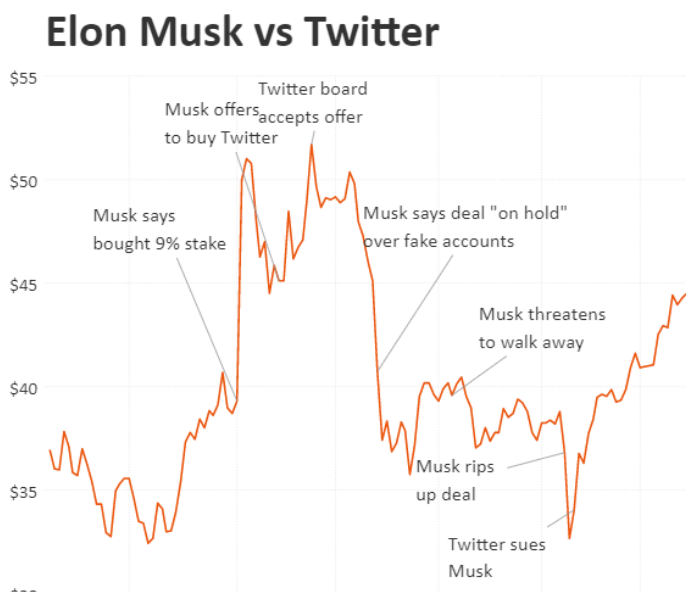
Once a company has been acquired, its shares are often delisted from the stock market, becoming a private company.
Why does this Matter?:
Often, companies are acquired at valuations higher than their current valuation. This opportunity means the company being acquired typically sees a immediate and significant boost/spike to their stock price.
A company making quality acquisitions gains assets & competitive-advantage
A company getting acquired could see an instant boost in share value*assets = resources, patents, real-estate, [anything of value]
Moat
A economic “moat” is a competitive advantage a company over other competitors.
Higher market share = Higher advantage
Moats are competitive advantages within a sector.Insider Activity
This subsection will overview insider activity. We will use sec.gov/edgar/browse/.
Insider activity allows investors (like you and me), to view how company executives and officers trade their shares.
Is the CEO buying or selling? Insider activities allows us to check.
We will talk all about Insider Trading during our meetings.
An in-depth tutorial on this website might be added in the future.
getting all the bits of insider activity would take too long to include here, and would draw on too long
Sector Prospects
The last part we’ll talk about in this section of Qualitative Analysis is sector prospects.
Every company/stock you invest in belongs in a certain industry, (industry = sector).
- Tech Sector
- Food Sector
- Automobile Sector
- Retail Sector
- Cybersecurity (Tech) Sector
(examples of some sectors)
Sectors Prospects
The overall prospects of a sector are important for every stock within that industry.
- Investing in a sector can be done by:
- Investing in ETFs for the sector
- (example:) Buying the general cybersecurity fund (CIBR)
- (example:) Buying the general cybersecurity fund (CIBR)
- Handpicking specific stocks within the sector
- (example:) Choosing CRWD & FTNT shares only
- Investing in ETFs for the sector
Piecing Everything Together
After covering each of these qualitative topics, you may be wondering:
“How do these topics help me?”
These qualitative factors that we discussed are crucial for informed investing:
Mergers and Acquisitions: Can signal potential stock price movements. Acquiring companies gain assets, while those acquired may see price spikes.
Moats: Companies with strong moats have lasting competitive advantages, helping them stay profitable despite competition.
Insider Activity: Watching insider trades can reveal executives’ confidence in their company’s future, guiding your investment decisions.
Sector Prospects: Understanding sector growth potential helps focus investments on areas with the best opportunities.
By considering if a stock is strong in each of these factors, you can make more strategic investment choices.
— Conclusion —
And that’s the end of Fundamental Analysis Pt. 1 –
Later, we will cover financials, earnings, and growth. With quantitative data, your decisions become more enhanced, whether through ETFs or handpicked stocks.
Originally Published: 8/12/2024
Last Revised: 9/2/2024